From fourth graders creating their own AR books to university exhibitions and international educational programs. At DEVAR, we examined around 200 publicly available examples of MyWebAR being used in education around the world and selected the 100 most interesting cases for our research. These stories show how augmented reality helps people learn, explore, and create.
Augmented reality has long since moved beyond technology labs. Today, it’s being used in classrooms, universities, art workshops, and international educational programs. Children explore space through AR, teachers create interactive learning materials, and students develop projects for real businesses and public spaces.
At DEVAR, we’ve always been interested in seeing what people create with MyWebAR. Today, more than 300,000 AR creators use the platform, and many of their projects go far beyond the usual applications of augmented reality.
That’s why we decided to take a closer look at how MyWebAR is being used specifically in education. We analyzed around 200 publicly documented examples, including academic research, educational programs, and projects created by teachers and students in different countries. We then selected the 100 most interesting cases for our research. These represent only a portion of the educational projects built with MyWebAR worldwide and a small fraction of the work we know about through our community.
Here are some of the stories that best illustrate just how many different ways augmented reality can be used in education.
Thailand: From a Government Education Initiative to a Virtual Botanical Garden
Our research uncovered several interesting examples of MyWebAR being used in schools across Thailand.
In 2025, the platform was included in Creative AR, a course developed as part of a research initiative by Thailand’s Office of the Basic Education Commission (OBEC), an agency under the Ministry of Education.
The course introduces students to creating augmented reality experiences. They learn about 3D graphics, develop digital objects, build interactive AR scenes, and present their own projects.
For us, this is an interesting example of AR creation becoming part of an educational program. Instead of simply interacting with ready-made digital content, students get to create it themselves.
Another unusual project took place at Namdibwittayakom School. Researchers from the University of Phayao developed a digital catalog for the school’s botanical garden, featuring 62 plant species.
Students can explore the plants through 3D models and audio descriptions in Thai. They can examine objects from different angles, zoom in, and access additional information that goes beyond what a photograph or textbook page can show.
The AR system developed for the botanical garden was tested by 20 students from Namdibwittayakom School. According to the study, the students gave it an average satisfaction rating of 4.55 out of 5.
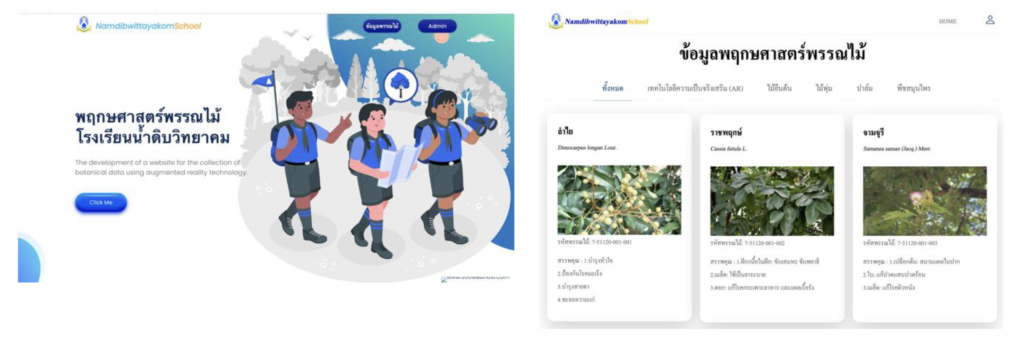
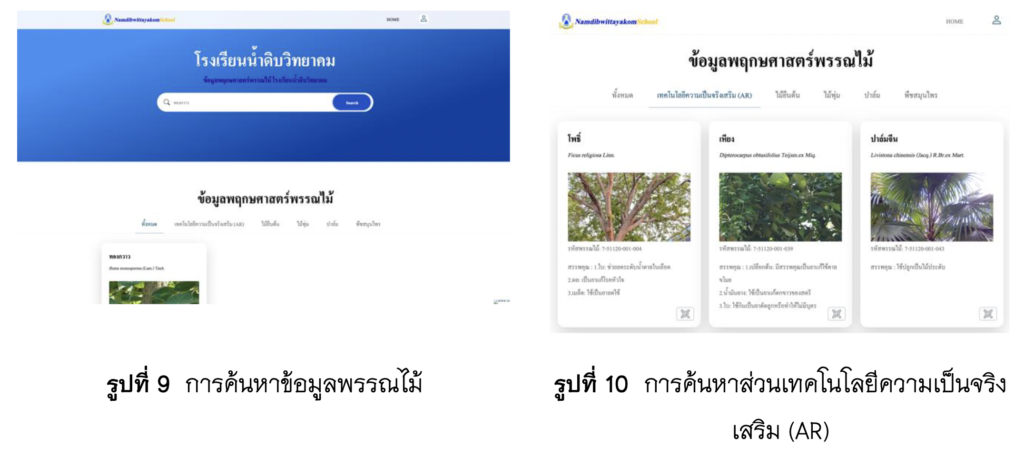
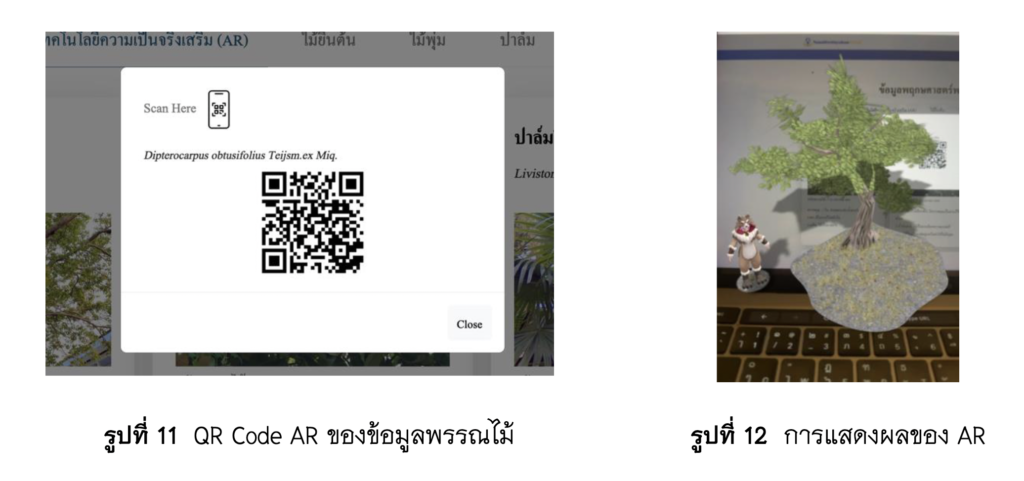
Source: The Journal of Spatial Innovation Development (JSID) Vol. 6 No.1, January-April 2025
At Banbokaew School, augmented reality was used to teach English. Researchers developed four interactive lessons in which students scanned QR codes, explored 3D images, and listened to word pronunciations. Nineteen students participated in the evaluation, giving the educational system an average satisfaction rating of 4.22 out of 5.
Indonesia: Exploring Space Without Leaving the Classroom
Several of the educational studies involving MyWebAR that we found came from Indonesia. Teachers and researchers are using augmented reality in science, biology, and computer science classes.
For example, SMP Negeri 1 Belitang III developed AR learning materials about the solar system. Students could scan QR codes to open 3D models of planets and explore them in the space around them.
Projects like these are particularly useful for studying objects and processes that students can’t observe directly in the classroom. They can examine the structure of a planet, explore human anatomy, or learn how a complex machine works.
Other researchers in Indonesia have used MyWebAR to develop interactive materials about the digestive system, computer hardware, and the structure of viruses. Each project has its own audience and educational goals, but they all demonstrate how familiar learning materials can be enhanced with interactive 3D objects.
Taiwan: When Children’s Drawings Come to Life
Augmented reality isn’t limited to science and technology classes. Some of the most creative educational projects emerge in art lessons.
In Taiwan, teachers invited children to turn their own drawings and written words into three-dimensional AR compositions. The students uploaded their work to MyWebAR and published the finished projects using QR codes.
The lesson was featured in art education teaching materials published in 2025. The guide includes instructions for teachers and links to AR projects created by the students.
Germany: An Interactive Map of Munich’s Olympic Park
In Germany, students at the Technical University of Munich used MyWebAR for a cartography project called Munich Marvel. They created a physical 3D map of the Olympic Park and added digital information about five locations.
The result combined a physical model with augmented reality, offering a new way to explore and understand an urban space.
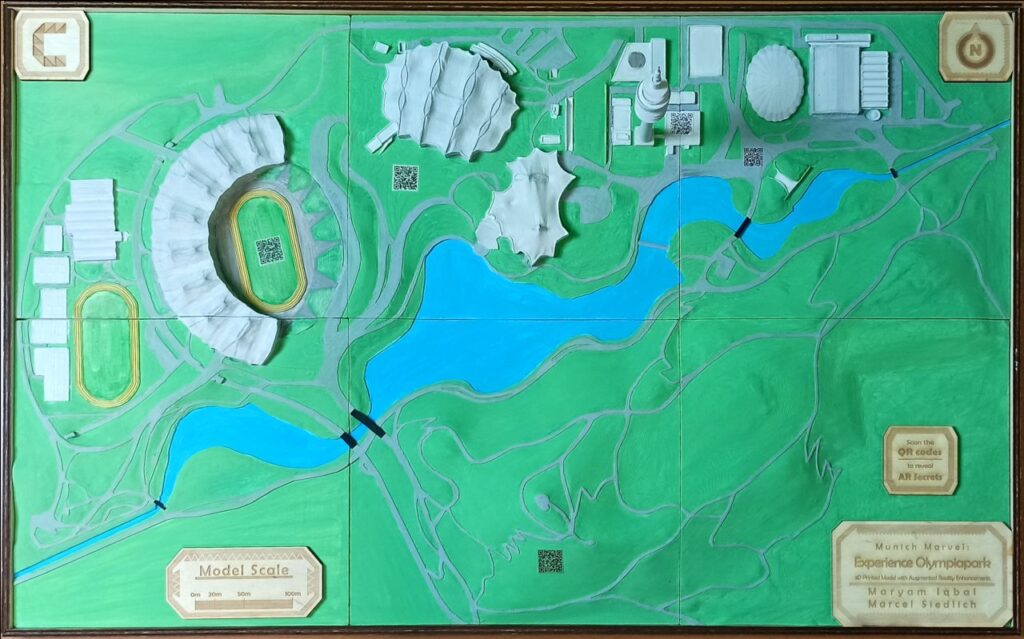
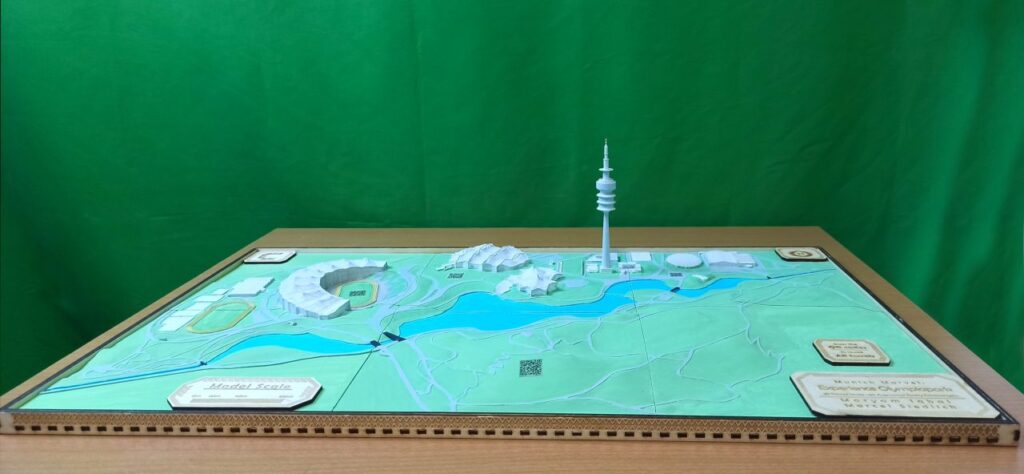
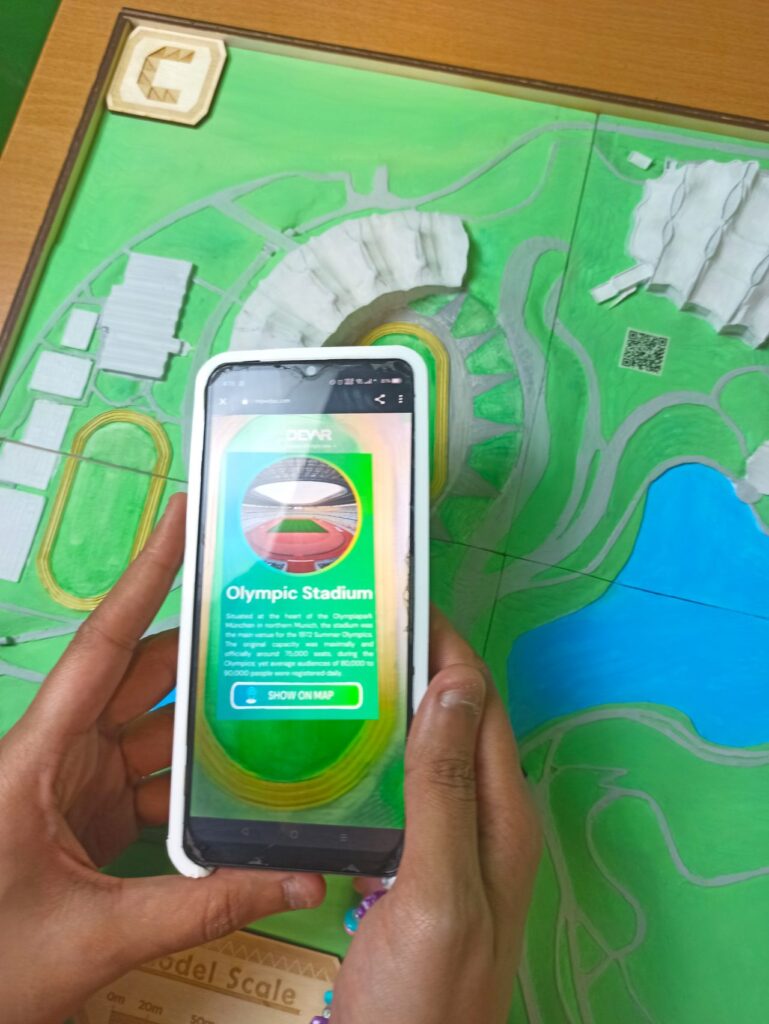
Source: Cartography M.Sc.
Brazil: Learning to Create AR Beyond Schools and Universities
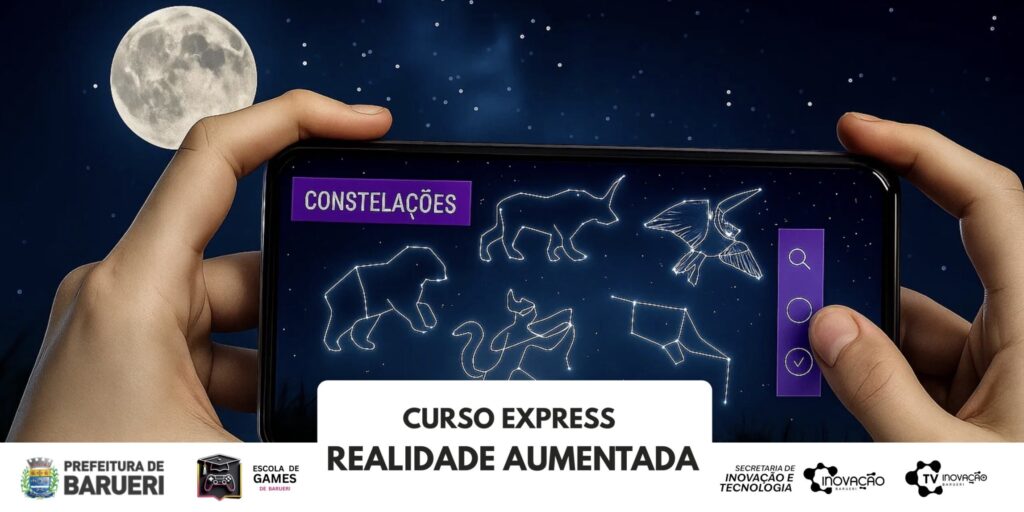
We found another interesting example in the Brazilian city of Barueri.
The local government launched an augmented reality course available to residents of any city, municipal employees, and interns.
Participants learn to create their own AR content using MyWebAR. As a practical assignment, they develop an interactive 3D business card that can be opened on a smartphone by scanning a QR code.
The course offers a certificate upon completion, and participants can complete the assignments using MyWebAR’s free plan.
This example shows that learning to create augmented reality isn’t just for students or aspiring developers. People from different professions are exploring AR as a way to bring new digital tools into their work and personal projects.
Japan: From School Students to Graduate Students at NIKKEI STEAM 2025
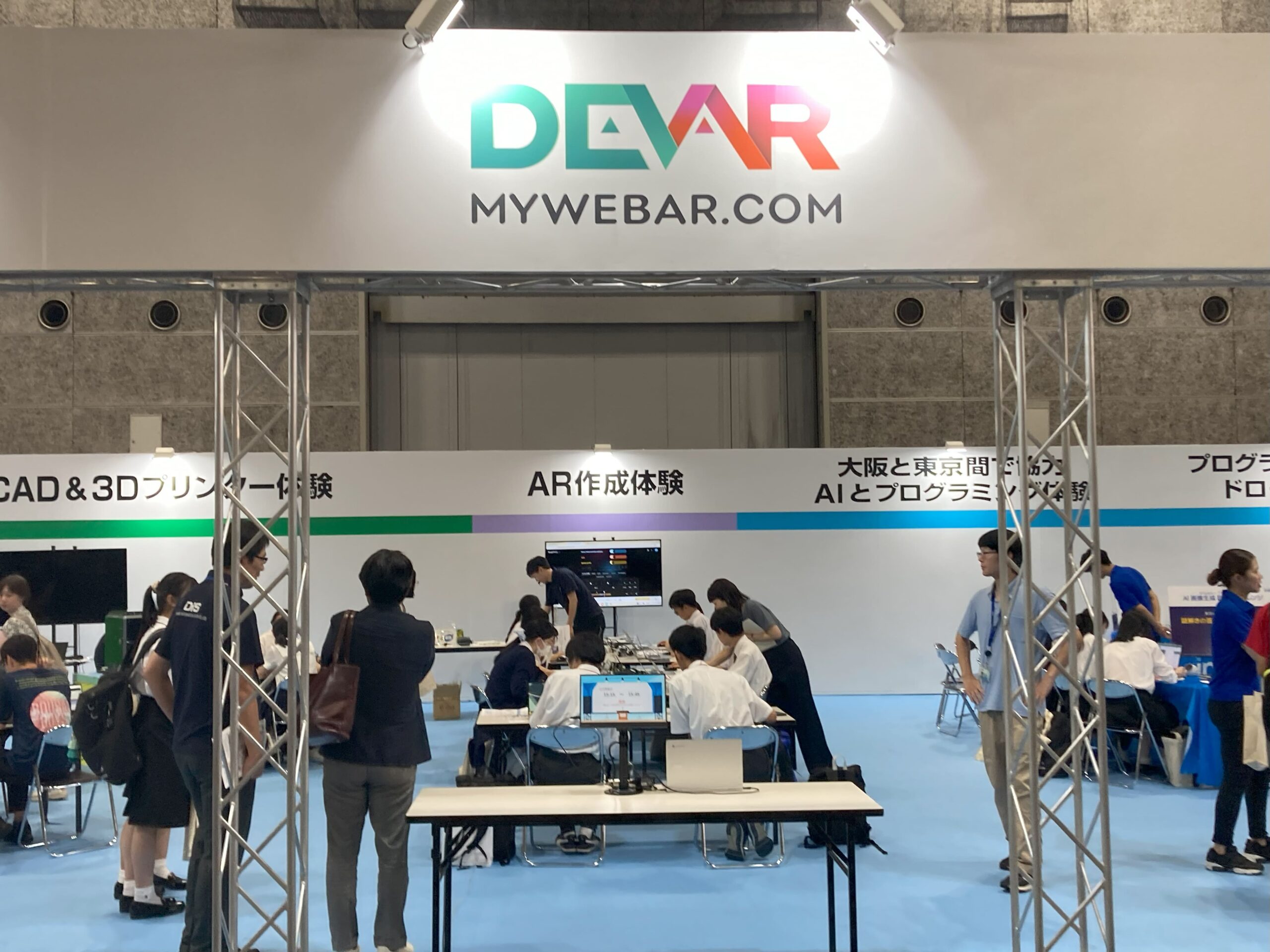
In August 2025, MyWebAR was featured at NIKKEI STEAM 2025, a major Japanese educational symposium held in Osaka and Tokyo. Our partner, Daiwabo Information System (DIS), organized hands-on workshops where school students, university students, and graduate students created their own augmented reality projects.
Participants recorded short video introductions, added them to AR scenes using MyWebAR, and received physical business cards with QR codes. When scanned, the cards came to life, displaying the owner’s video introduction.
Representatives from 57 Japanese schools attended the symposium, including 14 schools participating in a government initiative focused on digital transformation in education.
Read more: Japan’s Biggest STEAM Event Meets MyWebAR
Some of the Youngest AR Creators: Fourth Graders in the United States
At Hasten Hebrew Academy in Indianapolis, students in grades 4 through 8 create augmented reality projects using MyWebAR. Their work includes interactive books featuring favorite characters, AR masks, and personalized 3D avatars.
One project even crossed international borders. American students teamed up with their peers in Israel to create a collaborative AR book called Avatar2Gether. The children worked together on digital characters and interactive content despite being thousands of miles apart.
Technology teacher Michael Voskoboynik told us that he doesn’t want students to simply view ready-made AR content. His goal is to encourage them to come up with their own ideas and build projects themselves.
Students from the school have even presented their work at educational conferences, including ISTELive 2024. It’s an opportunity for children to take an idea all the way to a finished project they can share with an audience beyond their classroom.
We previously spoke with Michael about his students’ experiences in our interview, AR, VR, and AI: Driving Education’s Evolution.
More Than 120 Participants and 80 AR Projects: Shell Digitalization Academy
One of the largest educational initiatives involving MyWebAR took place at Shell Digitalization Academy in Trinidad and Tobago.
During the summer program, more than 120 young participants explored artificial intelligence, augmented reality, and virtual reality. Working with Twain Education, they used MyWebAR to develop their own projects, creating more than 80 AR experiences in total.
Their projects covered a wide range of topics, including agriculture, healthcare, architecture, real estate, and other fields. Participants could choose problems to work on, explore the technologies available to them, and develop their own solutions.
For example, AR can be used to place a 3D model of a building in a real environment, create interactive educational materials, or visualize an object that is difficult to understand from a flat image.
The learning process itself was an important part of Shell Digitalization Academy. Participants gained hands-on experience with emerging technologies while developing teamwork, creative thinking, and problem-solving skills.
Read more about Shell Digitalization Academy and MyWebAR
United Kingdom: Turning Children’s Drawings into AR Animation
In the UK, a similar idea involving children’s artwork took a completely different form. At Milton Keynes Arts Centre, teenagers participated in a creative workshop led by Sam Guilmard, Digital Director at Playbound Studio.
The participants started by learning the basics of animation using paper flipbooks. They then came up with a story about a bird in flight and created individual frames for a collaborative animation.
Some worked with watercolors, others used acrylic paints, and others made collages. Once all the drawings were finished, Sam combined them into an animation and brought it into MyWebAR.
The result was an interactive poster. Point a smartphone camera at it, and the illustrated bird comes to life.
According to Sam, building the AR scene itself took less than an hour. But the most interesting part isn’t the speed. It’s how a traditional art workshop became a collaborative digital project.
United States: More Than 25 Artworks in a University AR Gallery
At Western Kentucky University, students and faculty set out to explore how augmented reality could change the experience of visiting an art exhibition.
They brought together more than 25 works, including illustrations, graphic design, animation, 3D models, and other pieces. The team then created AR content and QR codes that visitors could scan inside the exhibition space.
The traditional gallery became a place where physical artwork and digital content existed side by side. Visitors could do more than look at the pieces on display. They could explore an additional interactive layer.
Students and faculty from different disciplines worked on the project, making the exhibition itself an exercise in interdisciplinary collaboration.
What Did DEVAR Learn from the Research?
When we started exploring educational projects built with MyWebAR around the world, we wanted to do more than collect unusual examples. We wanted to understand who creates augmented reality content, what problems people use it to solve, and how the role of the technology is changing in education.
After analyzing around 200 publicly available MyWebAR education cases and selecting the 100 most interesting, we identified several trends.
Age is becoming less of a barrier to exploring AR. Elementary school students create their own interactive books, teenagers experiment with animation, university students develop exhibitions and research projects, and adults learn to create augmented reality through professional training programs.
AR is becoming a creative tool, not just a way to view ready-made content. Students develop ideas, prepare images and 3D objects, build scenes, and share the results. Creating an AR experience can become as practical a classroom assignment as making a presentation or producing a video.
Augmented reality can be used across a wide range of subjects. The projects we studied cover biology, astronomy, foreign languages, art, cartography, computer science, and other disciplines.
The stories of MyWebAR users reflect these trends. In some projects, the platform helps teachers turn learning materials into interactive experiences. In others, it gives students the tools to create digital content themselves.
Just as importantly, viewing a finished WebAR project doesn’t require installing a separate app. Students can simply open a link or scan a QR code to experience augmented reality directly in their browser.
Want to Create Your Own Educational AR Project?
You don’t need to develop an entire interactive course to get started. Your first project could be as simple as a 3D model, a drawing, an educational flashcard, or a small virtual exhibit.
On our YouTube channel, we have a step-by-step example of creating an AR scene with a dinosaur. The video shows how to add a 3D model, set up its animation, and attach a link to additional information.
And if you’re looking for more inspiration, we’ve put together 17 ways to use AR in education, from interactive textbooks and virtual labs to historical reconstructions and educational games.
The Next Great Ideas Are Still Out There
DEVAR has been working with augmented reality since 2015. Over the years, we’ve seen devices, tools, and the ways people create AR content evolve. But what has always interested us most is what people come up with when they have access to these technologies.
Our research showed just how varied the use of MyWebAR in education has become. Behind every selected case is a specific idea: helping students understand a difficult topic, bringing an art exhibition to life, creating interactive learning materials, or giving young people a chance to explore a future career in technology.
And these are only the examples we were able to find publicly. We know that many exciting projects remain inside schools, universities, and creative teams without ever appearing in the news, academic publications, or social media.
Someone might be creating an AR lesson, virtual exhibition, or interactive book right now that we haven’t heard about yet.
If you’re using MyWebAR at a school, university, or in an educational project, we’d love to hear your story. We’re always interested in discovering what our community is creating and sharing those ideas with other creators.
And if you’re just getting started, try building your first project at MyWebAR. Your idea might be featured in our next international roundup.