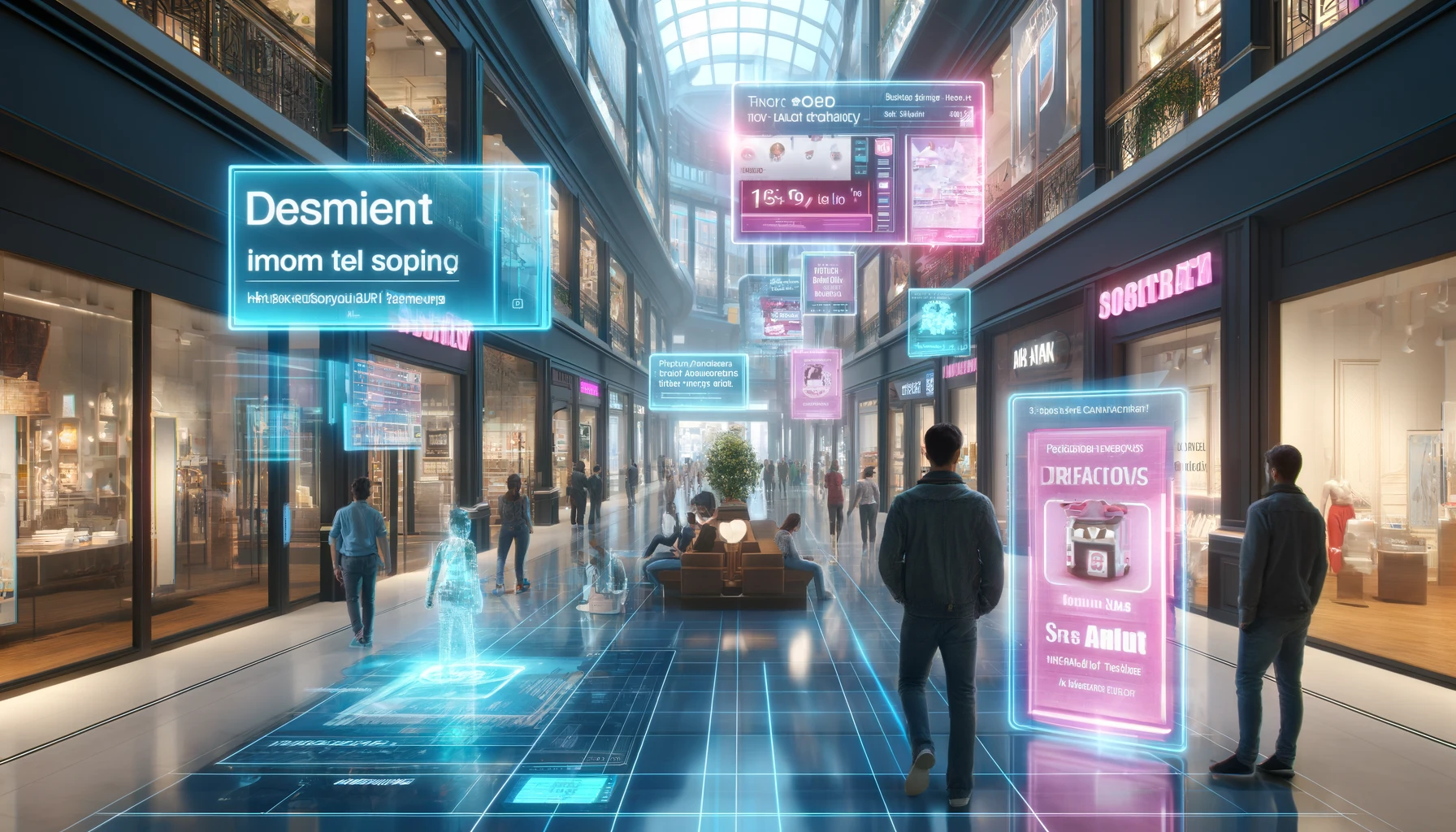
If you think about AR only as a flashy marketing effect, it is easy to miss the bigger opportunity. Right now, augmented reality is becoming more than a content format. It is turning into an extra layer on top of physical products, packaging, places, routes, merch, and even everyday printed materials. For small and midsize businesses, this matters. The barrier to entry is lower than it used to be, while interest in immersive formats keeps growing.
The next three years will be especially important. The market is moving toward wider adoption of lightweight AR glasses from major tech brands, which means people will become even more comfortable interacting with digital layers in the real world. But there is no reason to wait. Today, WebAR is still the most universal way to launch these experiences: no app download, no complicated onboarding, just a browser. That makes AR less of a “future technology” and more of a practical tool you can build around right now.
Here are 20 ideas that could become a startup, a service line, or a new product direction for a small or midsize business.
1. An AI-to-AR content studio for small business
One of the strongest ideas right now is a service that turns ordinary marketing needs into AR content with the help of generative AI. Small businesses want AR, but they do not want to hire a 3D studio, pay for a complicated production cycle, and wait for weeks. That creates space for a new kind of studio: one that quickly produces AR packaging, promo scenes, menus, merch, postcards, mini catalogs, and product reveals at a price small businesses can actually afford.
2. City AR routes and “100 years ago” experiences
This is a strong idea for travel teams, local guides, museums, city projects, and creative studios. A city route can become more than a list of stops. It can become a digital layer that shows what stood here 100 years ago, how a street looked before a redesign, who lived in a building, or how an entire neighborhood changed over time. This is especially timely ahead of travel season, and it works for visitors and locals alike.
3. A “living packaging” service for local brands
For local food, coffee, beauty, and lifestyle brands, packaging is often an underused channel. Yet it is already in the customer’s hand. A QR code trigger can open a recipe, a how-to, the product story, usage tips, a founder video, a bonus, or even a small game. For smaller brands, this is one of the clearest ways to turn packaging into an active content channel.
4. AR merch for creators, schools, festivals, and brands
Not just apparel, but the whole merch economy can be rethought through AR. T-shirts, hoodies, totes, badges, posters, cards, wristbands, and event merch can trigger animations, mini-scenes, quests, greetings, characters, or exclusive digital layers. This is a strong niche for a startup working with creators, events, schools, universities, and communities.
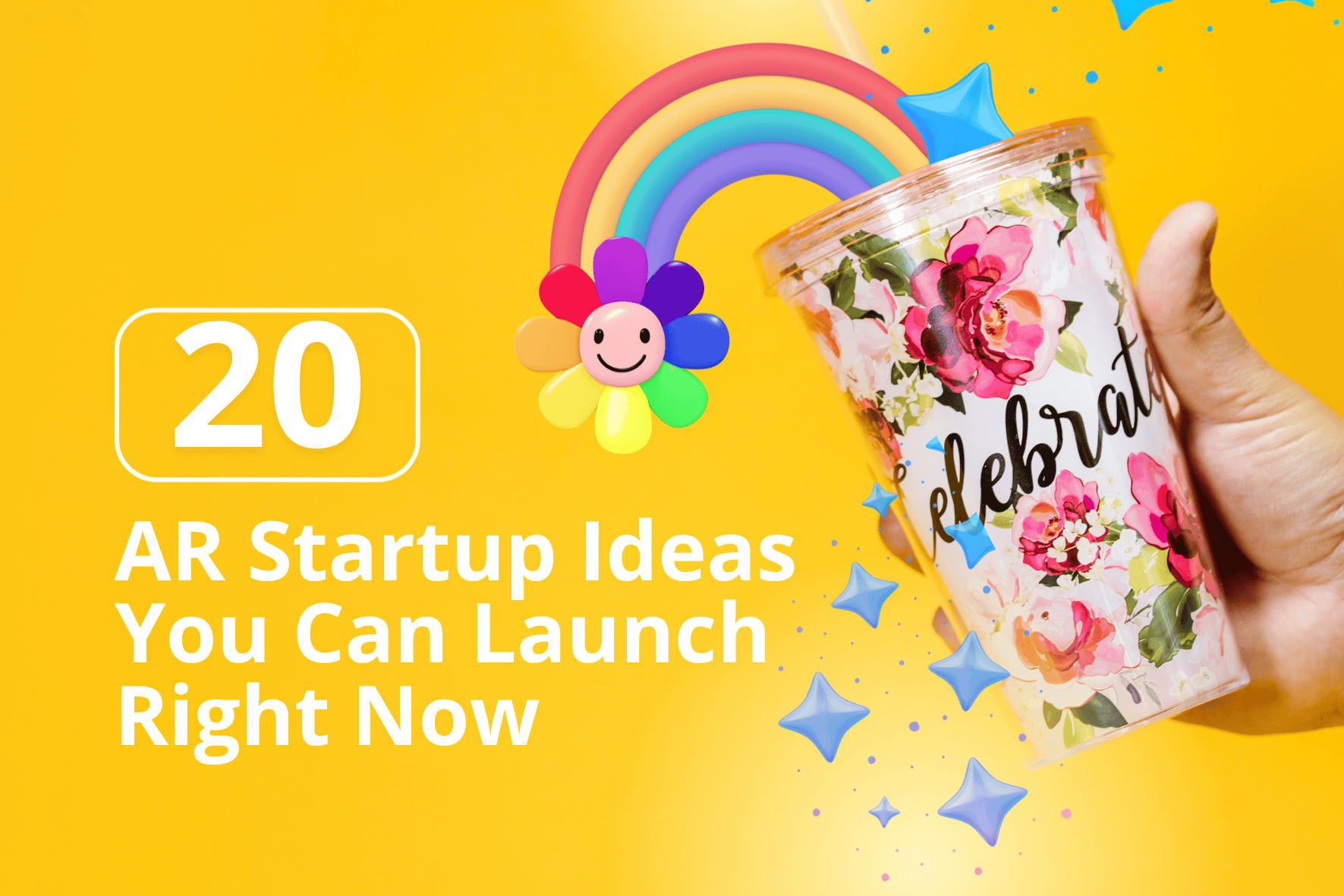
5. AR for cans, bottles, and coffee-to-go cups
This is a very practical niche: curved packaging. Cans, bottles, takeaway cups, tubes, candles, cosmetics, and other rounded surfaces all fit here. This is not just “AR on packaging” in a general sense. It is a narrower specialty where a business can become genuinely strong. For beverage brands, coffee shops, and craft products, it is especially relevant.
6. AR loyalty instead of a standard rewards card
Traditional loyalty cards rarely create any excitement. AR can turn them into a digital entry point. A card, package, receipt, or QR code can unlock a reward, a collectible, a mini-game, a personalized offer, a seasonal scene, or a member-only experience. For small businesses, this is a chance to make loyalty feel memorable instead of routine.
7. Interactive catalogs for furniture, decor, and home brands
This is one of the most practical AR use cases out there. Furniture, decor, lighting, home accessories, and appliances all benefit when people can see an item in their own space. It is not just “3D for the sake of 3D.” It helps customers decide. For SMBs in the home category, that makes an interactive catalog a real sales tool instead of a brochure.
8. AR analytics for offline spaces
Not every startup in this space has to focus on content. Another angle is measurement. A QR code on packaging, a display, a poster, a shelf talker, or a souvenir can become not only the gateway into an AR experience but also a way to understand what actually works. What gets scanned most, what people stay with longest, what leads to clicks, visits, or purchases. For offline businesses, this is a very practical martech play.
9. Virtual tours for hotels, showrooms, and factories
Virtual tours have been useful for years, but AR makes them more flexible and more immediate. This can be a hotel walkthrough, a resort preview, a showroom tour, an exhibition stand, a salon, a factory floor, or a production facility. For businesses, it works especially well as a lead generation and sales support tool.
10. AR quests for stores, malls, and local events
For malls, local retailers, cultural venues, and city events, AR quests remain one of the most understandable game mechanics. Object hunts, hidden offers, prize trails, digital stamps, final rewards. These can be launched as seasonal campaigns, weekend activations, or festival experiences.
11. Local art and mural AR for city spaces
Murals, street art, public art, festivals, cultural spaces, and local art initiatives all work well with AR. A wall can come to life, the artist can “speak,” a character can step out of the artwork, and viewers can unlock another layer of story. This is a strong area for creative studios and city branding work.
12. Product personalization before purchase
AR works especially well when customers want to “try the decision” before they buy. That could mean a color choice, a custom message, a gift version, a product bundle, a different configuration, or a limited-edition option. This is especially promising for handmade brands, gifting, decor, DTC products, and small ecommerce businesses.
13. The “updatable poster” for seasonal promotions
This is a very practical idea for businesses that do not want to reprint creative every season. One printed poster, storefront display, or menu board can unlock different digital content depending on the season, campaign, or offer. For restaurants, salons, shops, clinics, schools, and local service businesses, it is close to an ideal low-cost use case.
14. AR postcards and souvenirs for travel destinations
This may be a more familiar idea, but it is still a strong one. A postcard, magnet, ticket, city map, guide card, or souvenir can unlock a short place-based story, a character, music, an old-vs-now scene, or a mini route. In travel and local retail, it works well because it connects memory, a physical object, and a digital continuation of the experience.
15. Food storytelling, not just AR menus
AR in food is not only about 3D dishes on a menu. It gets more interesting when the digital layer lives on the package, the cup, the napkin, the coaster, the takeout box, or a tabletop sign. It can show ingredient origins, seasonal recommendations, pairings, chef stories, or even a small performance around the dish itself.
16. AR kits for education and micro-courses
Small education businesses, course creators, language schools, STEM clubs, art classes, and tutors can all make AR part of their materials. Flashcards, posters, worksheets, workbooks, assignments, and kits become more interactive and easier to explain. This works especially well when the goal is to demonstrate a process, not just present text.
17. AR covers and book trailers for publishers and self-publishers
Books, comics, albums, zines, educational materials, and self-published projects can all use AR as a way to stand out. A living cover, a short trailer, a character, a map, an animation, or an author introduction can turn a printed object into something more memorable. For independent creators and niche publishers, that can become a real sales and PR tool.
18. AR coloring pages, cards, and kids’ kits
This is a very clear product category for family, kids, and edutainment audiences. Ordinary printable materials gain a second life when characters come to life and drawings become interactive. The idea is not new, but it still works, especially for smaller education-focused and family-friendly brands.
19. AR filters and social-first campaigns
This is a more crowded category now, but it still makes sense for certain niches. Beauty, fashion, music, creator launches, micro-brands, and fandom projects can use AR as a trigger for UGC, TikTok, and Reels. The key is not just making an effect, but tying it back to the product or launch in a meaningful way.
20. AR menus for restaurants and cafes
Yes, this is one of the most obvious AR ideas, and that is exactly why it sits lower on the list. Still, it remains a workable first step. Restaurants, bars, dark kitchens, and cafes can use AR menus to show dishes, portion size, ingredients, seasonal items, and upsell moments without a heavy production process.
Where to start if you want something practical
If you look at the market pragmatically, the fastest and clearest directions right now are these:
- An AI-to-AR content studio for small business
- “Living packaging” for local brands
- AR merch for creators and events
- Interactive catalogs for home brands
- City AR routes and travel scenes
These ideas have one big advantage. They do not require a huge team, they are easy to explain to a client, and they show value almost immediately in a demo. Just as important, they are a good fit for a market that is moving from phones toward lightweight AR glasses.
The bigger takeaway
The most important shift right now is not that AR has become trendier. It is that it has become easier to launch and much closer to the real needs of small businesses. You do not need to build a massive platform. Sometimes it is enough to take a physical product, a package, a route, a piece of merch, a postcard, a catalog, or a souvenir and add a digital layer.
That is how new startups actually begin. Not from the idea of “doing AR,” but from seeing exactly where AR can make a product more useful, more noticeable, or simply more compelling right now.