Spatial Tracking is getting harder to treat as just another WebAR feature. For anyone already working in AR, it feels more like a shift in user experience itself. Marker-based AR helped the market grow because it gave people a simple trigger on packaging, posters, books, and other printed surfaces. Spatial Tracking opens the next stage. Digital content no longer lives on an object. It lives in the space around the user.
That is why this matters now. Smartphones are still the main device, but the market is clearly moving toward lightweight AR glasses. IDC expects strong growth in AR/VR headsets and smart glasses in the next wave of devices, and Research and Markets projects the AR glasses market to grow to more than $50 billion by 2030. That means content that already works well in real space on a phone will be in the best position when wearable use cases become mainstream.
For brands, agencies, museums, retailers, and travel teams, the real question is no longer “Can we do AR?” It is “Which spatial scenario should we test first?” Here are ten directions that already look strong.
1. Product placement at true scale
This is the most obvious use case, but it is still one of the most convincing. Let people place a product in their actual environment. For furniture, decor, appliances, and interior products, Spatial Tracking offers what a normal 3D gallery cannot: a real sense of size, distance, and fit. In retail, that has become one of the clearest reasons to use AR because it reduces uncertainty before purchase and shortens the path from interest to decision.
2. Storefronts that extend into space
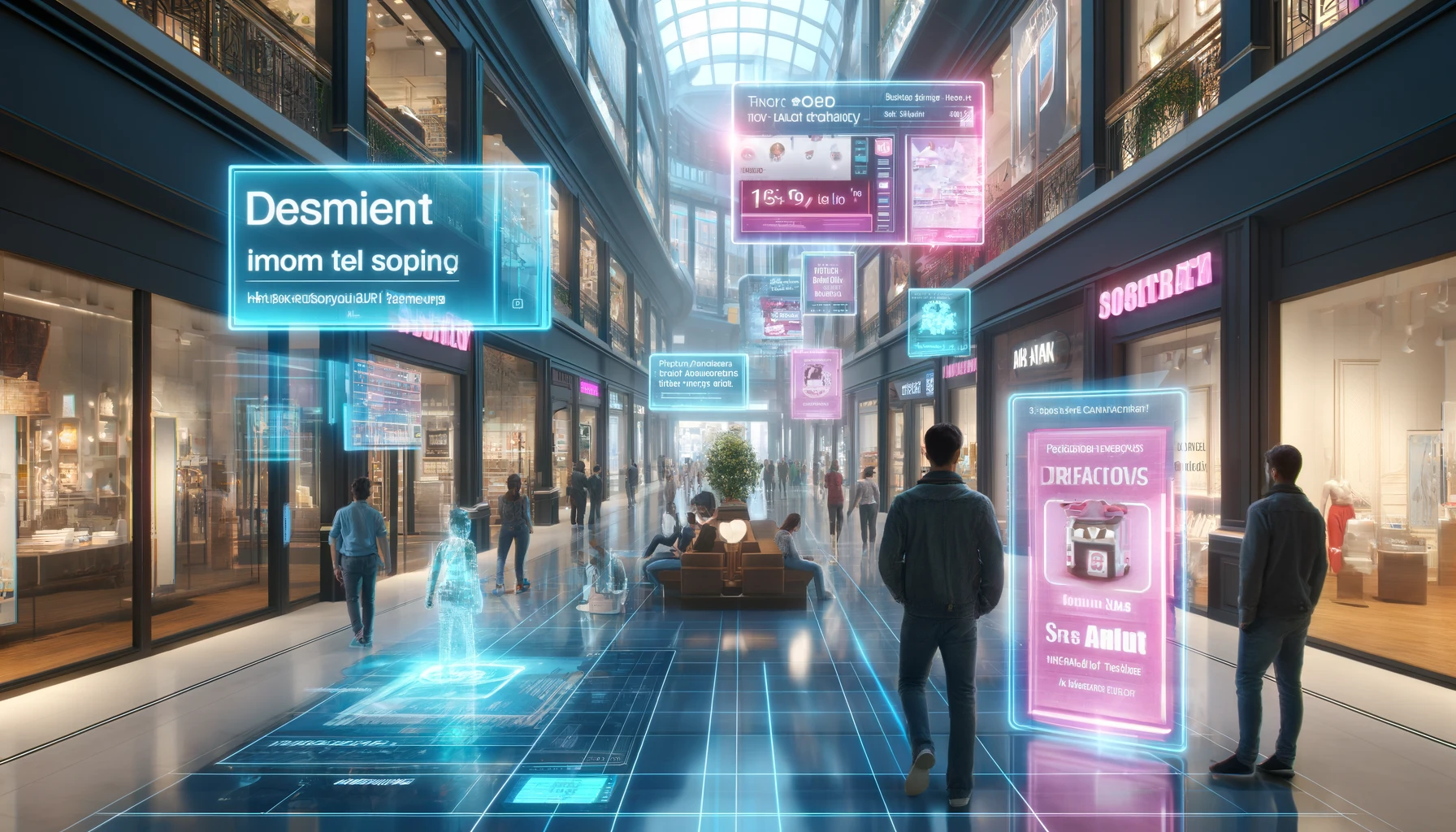
Another strong idea is to let the storefront continue beyond the storefront. In pop-ups and street retail, Spatial Tracking can pull a collection, a character, or a seasonal scene out of the window and into the pedestrian flow. For a brand, that turns a display into an entry point. People do not just look at the product. They step into its world.
3. Spatial activations at events
At events, marker-based AR often feels like a demo. Spatial Tracking makes it part of the venue itself. It can live near the stage, in the registration area, inside a sponsor zone, or along an activation route. For event teams, this is no longer about adding a digital trick. It is about building a spatial layer into the experience of the event. That matters more now, as brands look for something more memorable than reach alone.
4. Storytelling around the exhibit, not on the label
For museums and exhibitions, Spatial Tracking changes the whole logic of the experience. Instead of placing content on a sign or an image target, you can build the story around the object itself. Visitors do not just tap for extra information. They can walk around a scene, view a reconstruction, and understand context with their bodies, not just their eyes. Museums already working with 3D digital storytelling show how powerful this can be.
5. “What stood here 100 years ago?”
This may be the most natural tourism use case of all. Historical reconstruction tied to the actual point in a city is much more powerful than a text block in an app or a plaque on a wall. The user is not reading about the past. They are standing inside it. Streets, squares, markets, lost facades, old waterfront lines, entire buildings that are no longer there. Spatial Tracking turns all of that into a felt experience of place.
6. Spatial routes instead of ordinary maps
Another high-potential tourism scenario is routing that is guided by space rather than by a flat map. This could be a historical walk, a city quest, a route across cultural landmarks, a path through a festival site, or navigation along a waterfront. The user spends less time switching between screens and more time staying present in the place itself. For travel teams, that matters during peak season, when the goal is not just visits but deeper engagement.
7. Navigation inside large hospitality spaces
Hotels, resorts, cruise terminals, convention centers, major cultural venues, and even airports still rely heavily on signs, paper maps, and PDFs. Spatial Tracking makes wayfinding part of the environment. It works especially well in moments when the user has to decide where to turn, how to reach the spa, where the restaurant is, or how to find a conference hall or gate. In these settings, AR is not decoration. It is service.
8. Outdoor heritage trails and open-air exhibitions
There is a whole class of places where Spatial Tracking feels especially natural: archaeological sites, open-air museums, memorial routes, heritage trails, and nature parks. In these environments, the goal is not to pull users into another app, but to give them context right where they are standing. Museums have shown that AR is most effective when it connects the physical site with a reconstruction, archive layer, or historical scene.
9. Temporary retail and exhibition wayfinding
Temporary spaces almost always have the same problem: lots to see, not enough orientation. Spatial Tracking can solve that without adding pressure on staff. It can highlight key zones, guide people through a route, point out hero products, or create a more curated flow through the space. For fairs, trade shows, pop-ups, and seasonal retail formats, this is no longer experimental. It is practical.
10. Content that is ready for the AR glasses era
The most important idea may not be tied to one vertical at all. Any content that works well in space on a smartphone today will be easier to adapt to AR glasses tomorrow. That matters right now because the largest technology companies are investing heavily in lightweight wearable devices, and the market is focusing more on everyday usefulness than on flashy demos. This is where WebAR content with Spatial Tracking looks especially strong. It does not require an app. It is not tied to one type of hardware. It already trains users to engage with a digital layer in the physical world.
Why this matters right now
In the coming months, tourism may be the most underestimated vertical for Spatial Tracking. Peak season always increases competition for attention, not just for promotion. The teams that win will not be the ones that add another QR code to a sign. They will be the ones that build a digital layer into the route, the facade, the square, the museum object, the souvenir area, or the hotel space itself.
That is where Spatial Tracking shows its real value. It brings the user’s attention back to the place while adding context, story, navigation, and commerce right where it matters.
The bigger point
Spatial Tracking is the next big shift in WebAR not because it feels more advanced, but because it feels more natural. It moves the digital experience from the object into the environment. That opens up much more mature use cases for retail, events, exhibitions, tourism, and hospitality.
If the first phase of WebAR taught the market how to bring images to life, the next phase is about working with the world around the user as the interface itself. That is the shift that matters most right now.